
Making ByteEd move!
Learning Outcomes
Learning intention: how to use sequence to create algorithms.
- To convert an algorithm to a program.
- To regularly test and check the program.
- To use decomposition to test and trial the program when inputting.
- To debug any errors and modify/improve programs.
Let’s open our program again!
 Go back to https://replit.com, and log in.
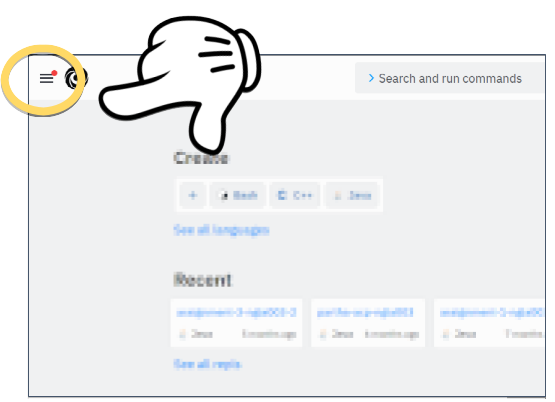
 Press the menu icon:
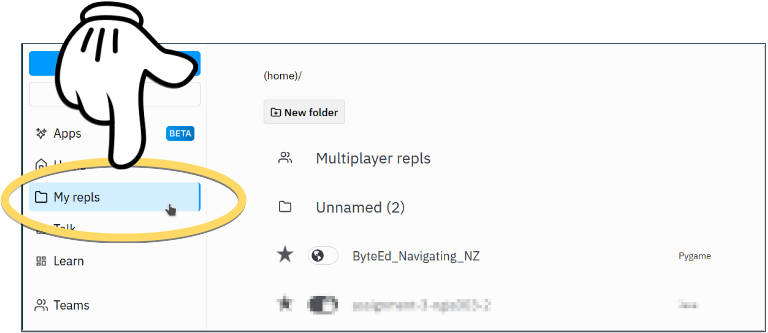
 Select My repls:
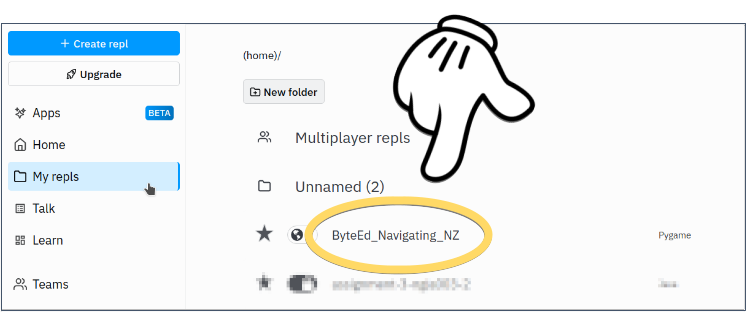
 Then select your project:
Get ByteEd moving!
Once you have opened up your project, press the  button.
Do you notice ByteEd isn’t moving?
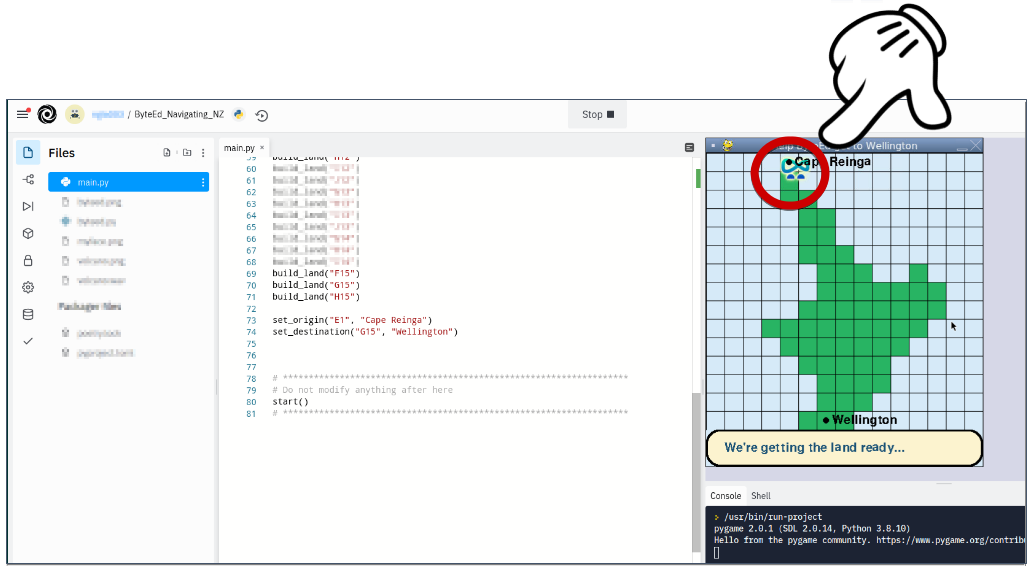
Let’s fix this and get ByteEd moving!
To achieve this, we need to tell ByteEd where to move. In other words, we need to give ByteEd directions to follow.
Remember earlier: if we wanted ByteEd to move down, down, left, left, then we used these instructions:
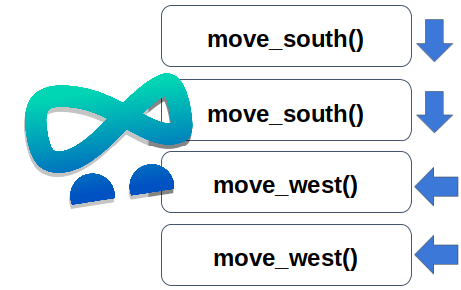
To specify this in Python, we need to write the following code:
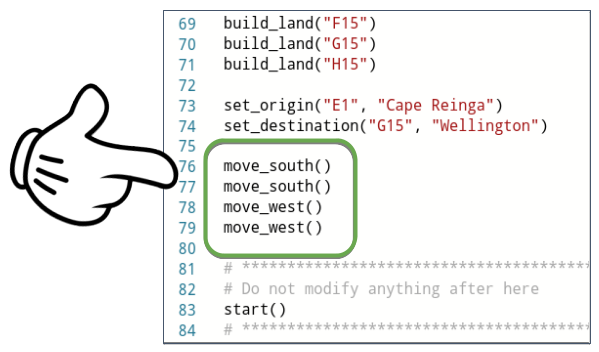
Now try and run the program - what happens to ByteEd?
…It depends on where your land is!
What happens if you program ByteEd to walk into the water?
The water is an obstacle that ByteEd needs to avoid!
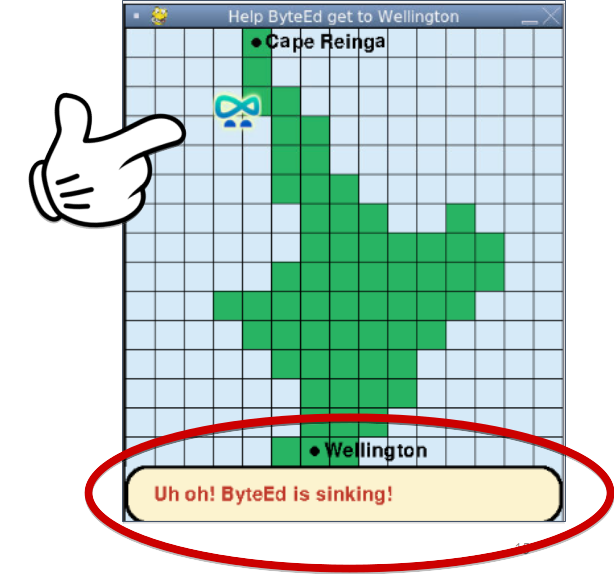
So now, complete the programming task to move ByteEd from the origin to the destination.
Make sure ByteEd does not go for a swim!
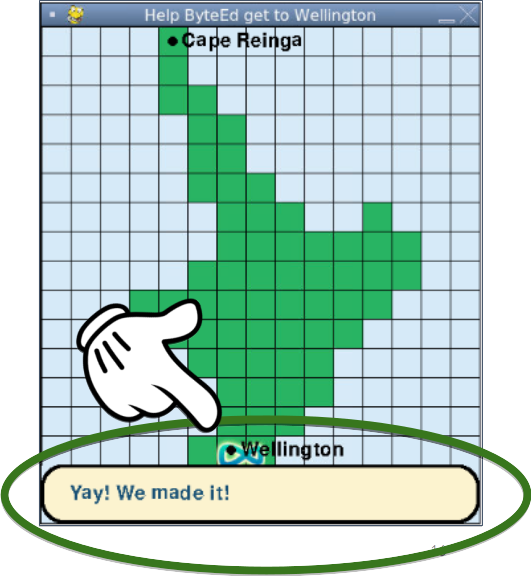
When ByteEd reaches the destination successfully, you’ll see this:
 Kua mutu? Finished?
Changing the origin and destination.
What happens when you change the origin for ByteEd?
What happens when you change the destination?
Practice writing algorithms and programs.