
Lesson 06: Fit for purpose and Randomness in programming
 Kōrero Mai: What does proper function mean?
Here is a flat head screwdriver...

What is the 'proper function' of a flat head screwdriver?
What is the job it was designed for?
What was the intention of the designer when they designed this outcome?
Kōrero Mai: What does alternative function mean

Can you think of any other uses/jobs that a screwdriver can be put to?
What alternative functions does a screwdriver do?
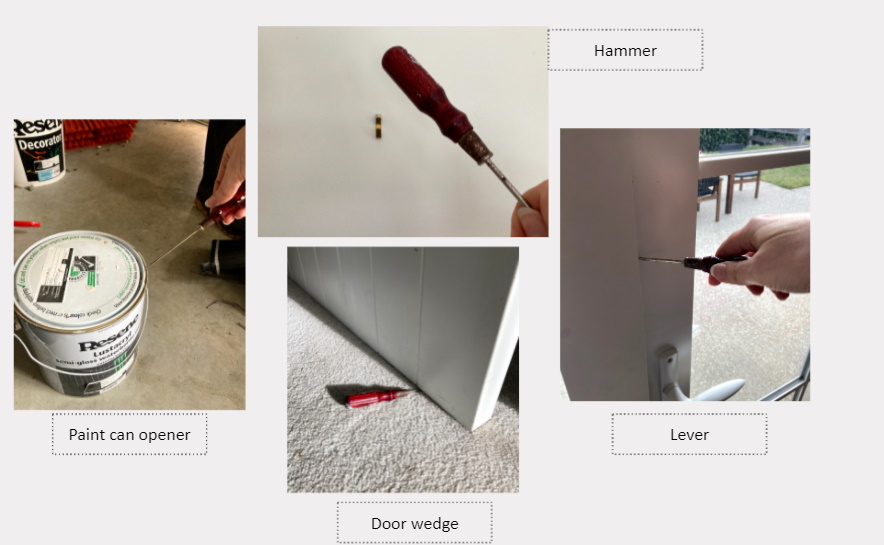
Were alternative functions successful?
Do you think the alternative functions for the screwdrivers were successful or unsuccessful?
Why?
Kōrero Mai: Are these alternative functions successful or unsuccessful - why?
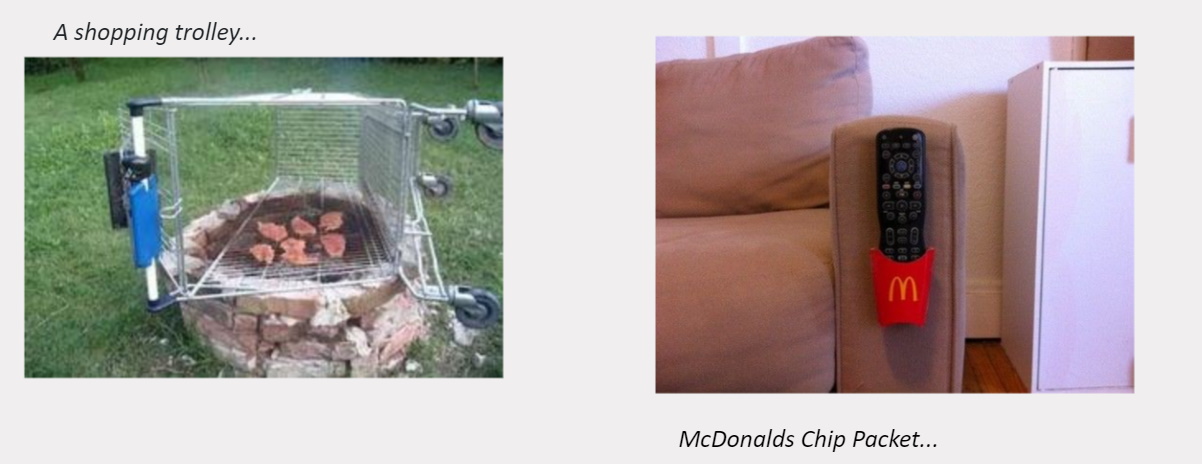
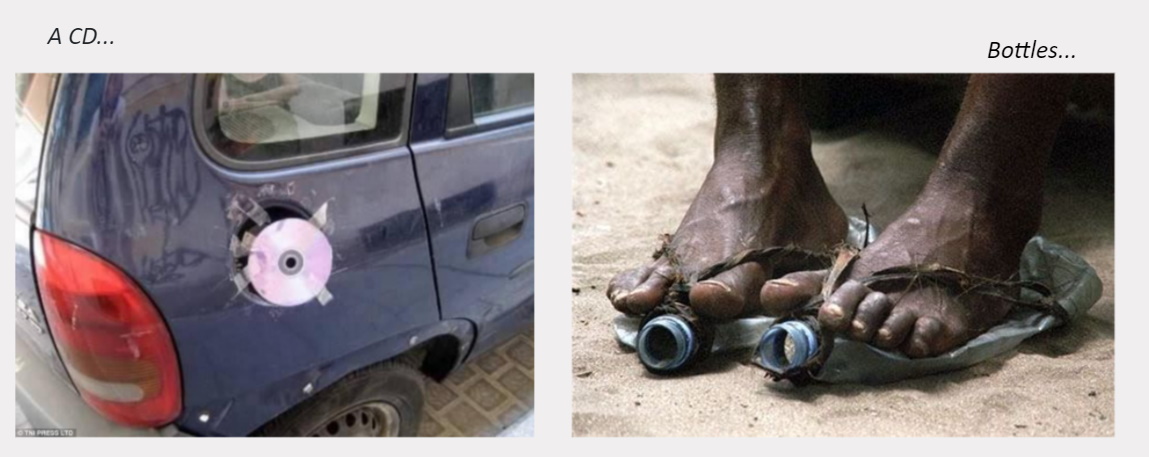
Kōrero Mai: So what makes a technological outcome fit for purpose?
Let's look at the screwdriver again...
What is it about the design of the screwdriver that makes it successful?
Fit for purpose
What does fit for purpose mean?
Fit for purpose is the ability of a technological outcome to do the job that was clearly defined in the original brief.
The technological outcome serves its intended purpose within its intended context.
How can designers make outcomes fit for purpose?
Look at these original digital devices.
- What are they?
- What was their intended purpose?
- Would they be suitable for today’s society? Why?
- What would you need to change to make them fit for purpose today?
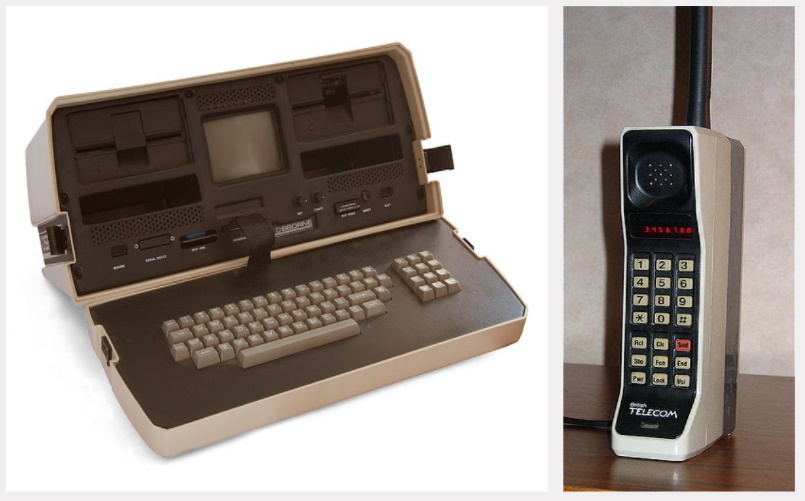
An opened Osborne 1 computer, ready for use. The keyboard sits on the inside of the lid. oNe of the first commercial laptops released in 1982! The Motorola DynaTAC 8000X. In 1983, it became the first commercially available handheld cellular mobile phone.
Randomness in Technology
Kōrero Mai: Think of a number between and including 1 - 6
Have someone tally up everyone's responses in the class.
What were the results? Did all the numbers have an even distribution?
More likely than not, some numbers will either have more or less tally marks than others. Why do you think that is
Why randomness is biased
The reason why most people can’t give a “true” random response is because of biased thinking. There is always some reason why we chose a certain number, even if we felt like there was none.
“Children - most of whom are between 8 and 11 years - show a preference for relatively large numbers when choosing numbers 1-10. Adults show a preference for small numbers with the same response set.” (John N. Towse, et al. 2014 )
But what about computers? They don’t have a biased decision do they?
How computers generate “random” numbers
Watch the video below which explains how computers come up with random numbers.
After watching the video, discuss:
- Is a computer truly random?
- Explain your answer
- How does a “seed” work?
- Where do you think computers use randomness?
What is a “seed” and why is it important?
Computers can never truly be random as they always follow predetermined instructions from a program.
In the video we learnt that a commonly used algorithm for generating random numbers is “middle squares”. However, this still requires a “random” number to use as it’s base.
This is why we use a “seed” to grow a random number from. We use time as the seed as it is ever changing and provides a form or randomness (unpredictability).
 Kōrero Mai: what if we use the same seed?
If we used the same exact seed (and changed nothing else about how our program works), we would actually get the same results every time!
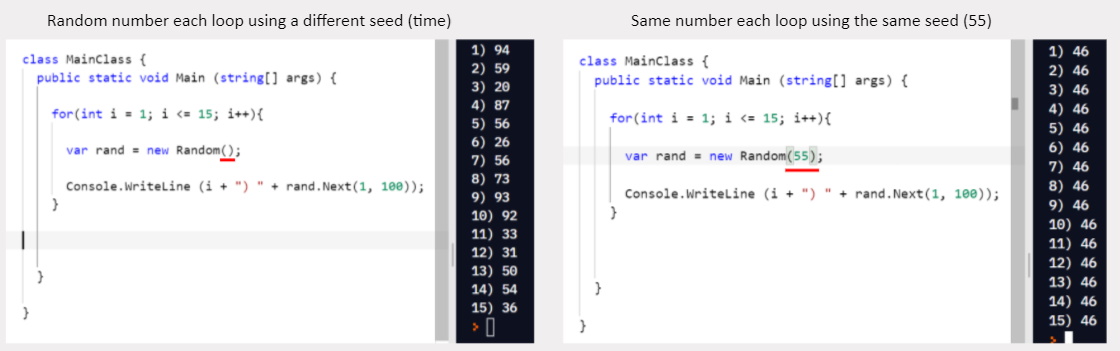
Where else is the use of Seeds used?
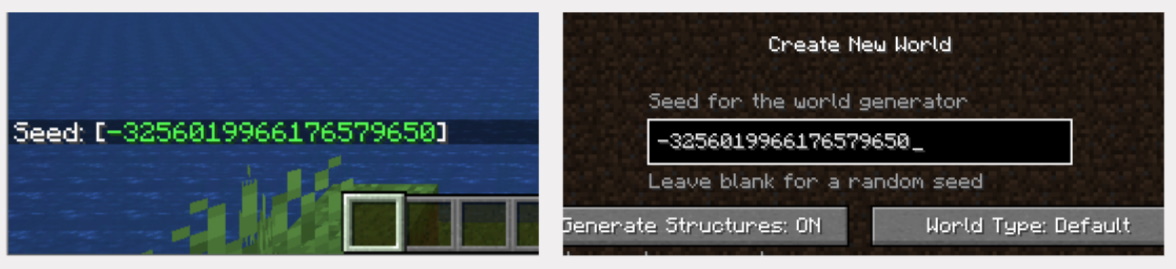
If we know the seed that a program uses, we can actually predict to a certain extent what the outcome will be.
An example of this would be in the game Minecraft (or any game with “randomly” generated worlds). If you are using the same version of the game, and place the same seed in. You will get the exact same map.
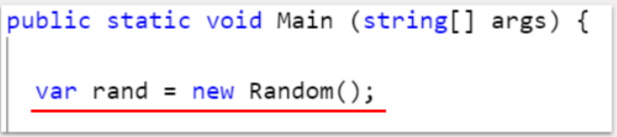
Getting a random number through code
When getting a random number through code, it depends on the language and application we are using. Generally a quick google search will show you the result. For C#, we do it the following way:
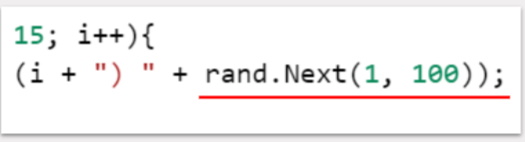
use
"variableName".Next(min, max) to choose a random number between the minimum and maximum values.
More info : found here
 Kua reri? - Ready? It's your turn... Construct your VR world
Follow the brief instructions to construct a program to randomly generates keys that users could potentially use.
Kua mutu? Finished? What to try next…
How can designers and programmers ensure VR hardware and software is fit for purpose?
What needs to be considered?
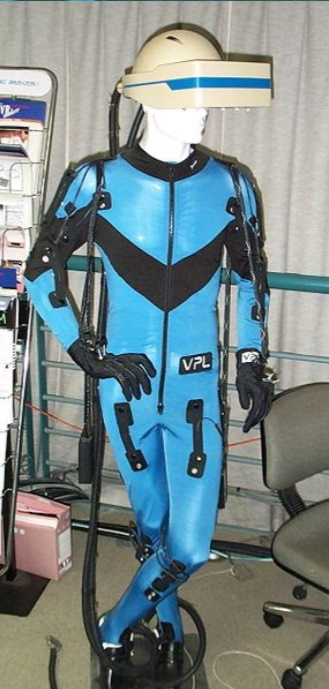
A VPL Research DataSuit, a full-body outfit with sensors for measuring the movement of arms, legs, and trunk. Developed circa 1989. Displayed at the Nissho Iwai showroom in Tokyo