
Lesson 7: Virtual Reality Devices
 Virtual Reality - ao mariko
Headset - piri māhunga
 Kōrero Mai: what are the subsystems in a Virtual Reality environment?
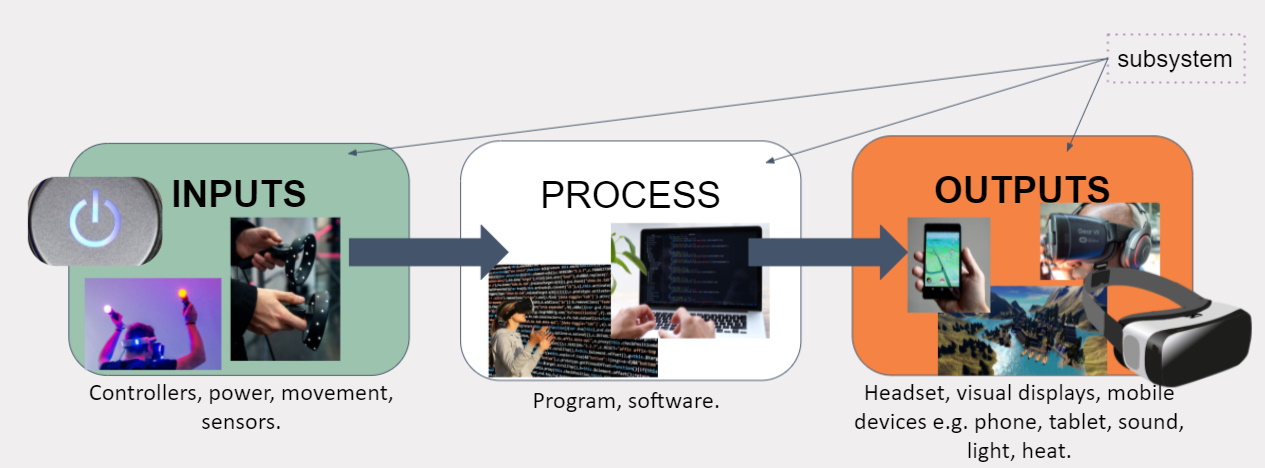
Remember back in Lesson One we explored Technological Systems? Today we are going to look at the Virtual Reality environment as a system.
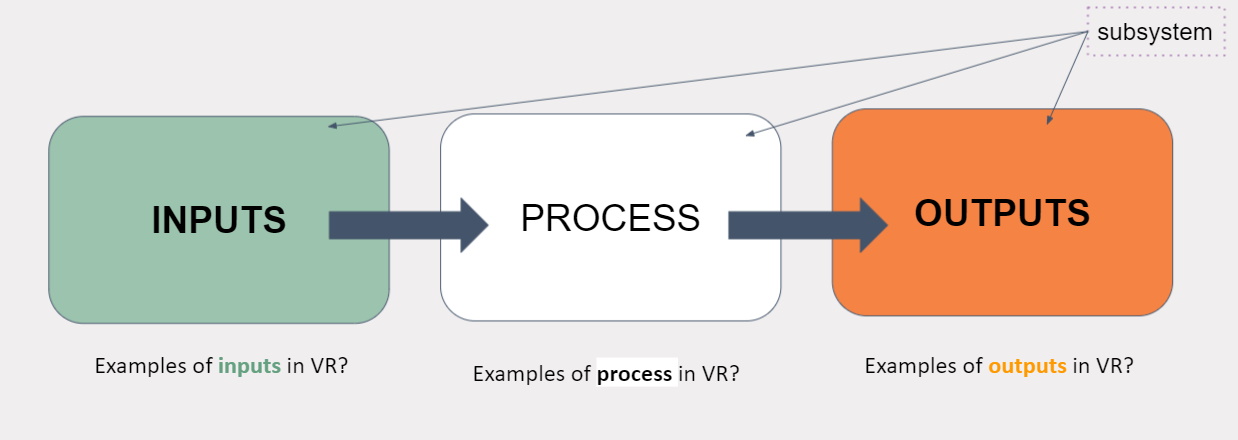
Kōrero Mai: What is the role of each component in the VR system?
 Kōrero Mai: how can we explore a Technological Outcome? We use Product Analysis
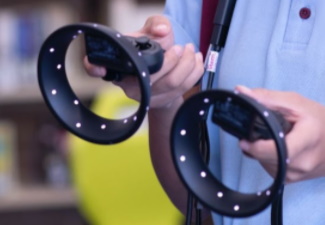
Look at the images showing one type of VR controller. Answer the following questions:
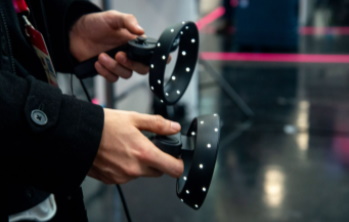
 Kua reri? - Ready? Product Analysis of VR devices.
Choose two types of headset or controller to analyse and compare, e.g. Google Cardboard & Oculus Quest.
Extension task: Compare and contrast the two outcomes. What are the similarities and differences?
Accessibility in Digital Tech:
Design hardware (Headset or a controller) for a specific stakeholder
Consider the needs of a specific stakeholder (user) for the design of a new headset, controller or both. Design brief examples:
Neurological conditions may have impairments in the arms that make reaching difficult, and lower extremity impairments may make balance and walking challenging. Using VR may be an effective and engaging way to improve upper or lower extremity coordination and balance during physical therapy. Can you design a VR system that would enable people with restricted movement and balance problems to undertake physical activities?
Any orthopedic injury that creates an impairment that limits functional mobility may possibly benefit from the use of virtual reality during rehab. Examples could be sufferers of ankle sprains, shoulder pain etc. Can you design controllers that are easy to use for these stakeholders during rehabilitation?
Pediatric: Physical therapy is hard work, but for children, this work is often done through play. Finding novel ways to incorporate play activities into rehab may be key to getting proper functional movement. Using VR technology may be just the key to keeping a child engaged in the work of rehab while correcting movement impairments. Conditions that may benefit from VR use in children may include: Cerebral palsy, Autism, Attention deficit disorder. Can you design a headset/controller for young children who have a physical or other need?
Kua reri? - Ready? It's your turn... Design a headset/controller for a chosen stakeholder
Consider the needs of a specific stakeholder (user) for the design of a new headset, controller or both. You can choose one of the given design briefs or you can choose your own need and stakeholder. Think about:
At this stage just think about the design of the hardware. Use annotated sketches to explain the design.
Kua reri? - Ready? Design a headset/controller for a chosen stakeholder
Design software for a Headset or a controller for a specific stakeholder
Consider the needs of a specific stakeholder (user) for the design of software to use with the new headset, controller or both. Think about:
Kōrero Mai: What is 'control' in a Technological system? what systems use 'control'?
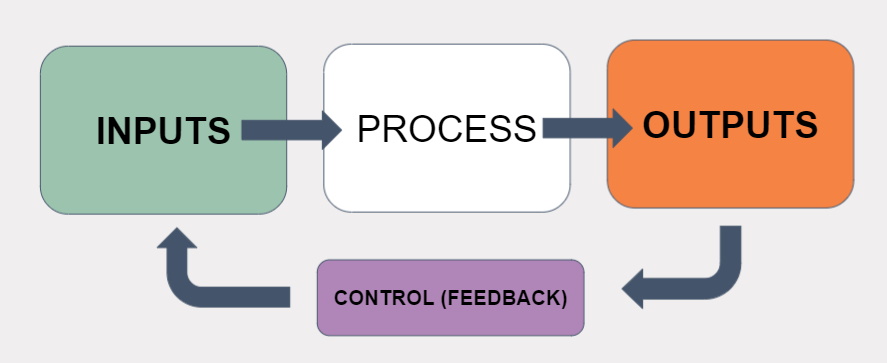
Control mechanisms are designed to enhance the efficiency of a technological system
Some systems have self-regulating control mechanisms built into them; these monitor and adjust the various transformations in response to changing inputs to ensure that the outputs are consistent in kind and quality.
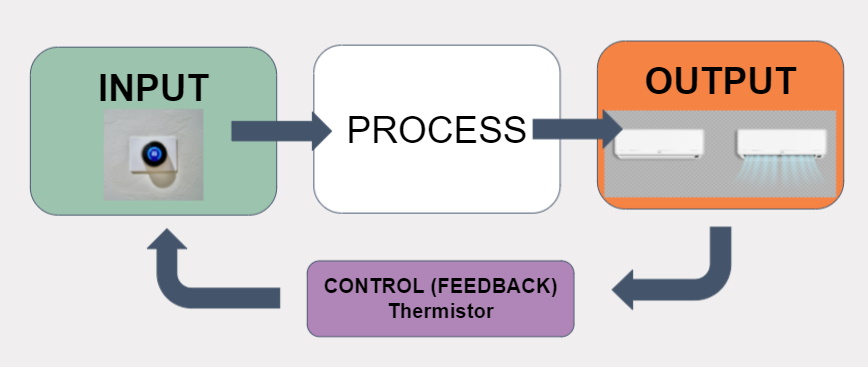
If a steady temperature is maintained because the furnace or air conditioner goes on and off continuously, the temperature loop is a positive feedback system. The thermostat (Sensor = Input) and the furnace/heater (Output) work together to maintain a constant temperature by cycling on and off.
 Kua reri? - Ready? It's your turn... Design a headset/controller for a chosen stakeholder
Need some ideas? Head to Oculus: Designing accessible VR displays which considers the needs of those with light sensitivity, colour blindness and impared vision.